Hispanic Heritage Month - 11 Afro-Latinos You Need To Know
Hispanic Heritage Month - 11 Afro-Latinos You Need To Know
September 14, 2026Last updated : September 14, 2026MoviesHub
Source: Ivan Apfel/Raymond Hall/Jacopo M. Raule/Getty.
Every year, National Hispanic Heritage Month, celebrated from Sept.15 through Oct. 15, offers an opportunity to recognize the rich cultures, histories and contributions of Hispanic and Latino communities, including the many Afro-Latino voices that have helped shape them.
Afro-Latinidad is incredibly diverse, spanning generations, countries and cultures. From Hollywood heavyweights and chart-topping musicians to television stars and rising actors, Black Latinos are continuing to make their mark, all while challenging long-standing ideas about what Latino identity is supposed to look like.
The celebrities featured here come from different backgrounds and have taken very different paths to the spotlight. But they share a common thread: each has helped bring greater visibility to Afro-Latino identity and shown that there is no single way to be Latino, or Afro-Latino.
Here are 12 Afro-Latino celebrities you need to know.
1. Amara La Negra
Source: Dimitrios Kambouris / Getty
If you’re talking about Afro-Latina representation in pop culture, Amara La Negra deserves a spot near the top of the list. The Dominican-American singer, actress, dancer and television personality became widely known through Love & Hip Hop: Miami, but she’s been performing since childhood.
Amara has never been afraid to talk about colorism, anti-Blackness and the challenges darker-skinned Afro-Latinas face in entertainment. She’s used her platform to proudly celebrate her Dominican and African heritage and push back against the idea that being Black and Latina are somehow separate identities.
Her visibility is particularly significant because darker-skinned Afro-Latinas have historically had fewer opportunities to see themselves represented in mainstream Latino media.
Read more after the flip!
2. Cardi B
Source: Jeff Kravitz / Getty
Cardi B is one of the biggest names in music, but she’s also become a fascinating figure in conversations about Blackness and Latinidad. The Bronx superstar is of Dominican and Trinidadian heritage and has openly embraced both sides of her Caribbean identity.
Cardi has pushed back against people who try to tell her what it means to be Black, Dominican or Latina.
During a 2018 interview with Zendaya for CR Fashion Book, the Bronx native made it clear that she was proud of her Afro-Latina heritage.
“One thing that always bothers me is that people know so little about my culture. We are Caribbean people. And a lot of people be attacking me because they feel like I don’t be saying that I’m Black,” she said. “Some people want to decide if you’re black or not, depending on your skin complexion, because they don’t understand Caribbean people or our culture. I feel like people need to understand or get a passport and travel. I don’t have to tell you that I’m Black. I expect you to know it.”
Cardi thanked her father for educating her about the vast Afro-Latino diaspora across the Caribbean.
“When my father taught me about Caribbean countries, he told me that these Europeans took over our lands. That’s why we all speak different languages. I expect people to understand that just because we’re not African-American, we are still Black. It’s still in our culture.”
That pride is evident across the Grammy-winning artist’s music and media. The mother of four most recently wore a sexy outfit donning the Dominican Flag in her music video for her hit song “AH HA” and intentionally used a sample of a Dominican merengue song in her chart-topping smash, “Bodega Baddie,” blending which she described in a 2025 interview with Gayle King, as “Bronx Drill” with the “Dominican Republic.”
Over the years, she’s used her enormous platform to discuss issues affecting Black and Latino communities, including racism, immigration and political representation. For many young Afro-Latinos, Cardi’s unapologetic approach to being a Black Caribbean Latina is part of what makes her so relatable.
3. Zoë Saldaña
Source: Rich Polk / Getty
From Avatar to Guardians of the Galaxy, Zoë Saldaña has become one of Hollywood’s biggest stars. The actress has Dominican and Puerto Rican roots and has frequently been included in conversations surrounding Afro-Latinidad and the complicated ways race and identity are understood within Latino communities. She’s made history too. In 2025, she won the Academy Award for Best Supporting Actress for her role as Rita Mora Castro in Emilia Pérez at the 97th Academy Awards, becoming the first American of Dominican origin to win an Academy Award. The 48-year-old actress said she was proud to be blessed with the distinct honor.
“My grandmother came to this country in 1961. I am a proud child of immigrant parents, with dreams and dignity and hardworking hands,” she said, holding back tears as she accepted the award. “And I am the first American of Dominican origin to accept an Academy Award, and I know I will not be the last.”
She added:
“I hold the fact that I’m getting an award to a role where I got to sing and speak in Spanish — my grandmother, if she were here, she would be so delighted. This for my grandmother, Argentina Cesse.”
But Saldaña’s impact extends beyond the screen. She’s supported children’s health and development initiatives, worked with Shot@Life to promote access to lifesaving vaccines and has supported organizations focused on young women, autism awareness, homelessness and disaster relief.
She also founded BESE, a media platform created to amplify stories from communities that have historically been underrepresented in mainstream media. According to the Hollywood Walk of Fame website, “BESE fills a niche for young Latinx audiences craving positive portrayals of the modern American experience.”
4. Jharrel Jerome
Source: JC Olivera / Getty
Jharrel Jerome represents a younger generation of Afro-Latino talent making serious waves in Hollywood. The Bronx-born actor is of Dominican and Haitian descent and became a breakout star after playing Korey Wise in Ava DuVernay’s When They See Us, a performance that earned him an Emmy in 2019.
He has since taken on roles in projects including I’m a Virgo and Unstoppable, showing the range that has quickly made him one of the industry’s most exciting young actors.
Jerome’s Dominican and Haitian background also gives him a unique place in conversations about Black Caribbean identity. His very presence on major screens helps expand the picture of what a young Latino leading man can look like.
5. Laz Alonso
Source: Daniel Boczarski / Getty
You might recognize Laz Alonso from Avatar, Stomp the Yard or The Boys, but there’s much more to the actor than his impressive résumé.
Alonso is Afro-Cuban and has been outspoken about race, representation and the need for greater visibility for Black Latinos. During a 2021 interview with REVOLT, he discussed his proud identity as a Black Cuban-American and spoke on his desire to see more Afro-Latino people embrace their heritage instead of denying it.
“If you understand the history of how Latin America was colonized, then you understand that this conversation was purposely clouded so that Afro-Latinos would not unite,” he explained. “So now they’ve created a whole different race — you’re not Black, you’re something other than Black — and it created a class system; whereas the closer to white you were, the higher up in the class system you were. Nobody wanted to be Black because that meant you’re at the bottom of the totem pole. There is a re-education that has to take place whereas Black people from all over Latin America understand that they are Black, you know? (laughs). If you want to call yourself mulatto, okay, but guess what? That means you’re still Black, you’re just a lighter version of Black.”
He’s also talked about wanting to create more opportunities for Afro-Latino actors through his own production work. As Alonso explained in his April interview on TV One’s UNCENSORED, his goal is to help open doors for the people coming after him and showcase the diversity of Black and brown people throughout Latin America.
Basically, he’s not just trying to get through the Hollywood door; he’s trying to hold it open for his brothers and sisters, too.
Happy National Hispanic Heritage Month: 11 Afro-Latino Celebrities You NEED To Know.
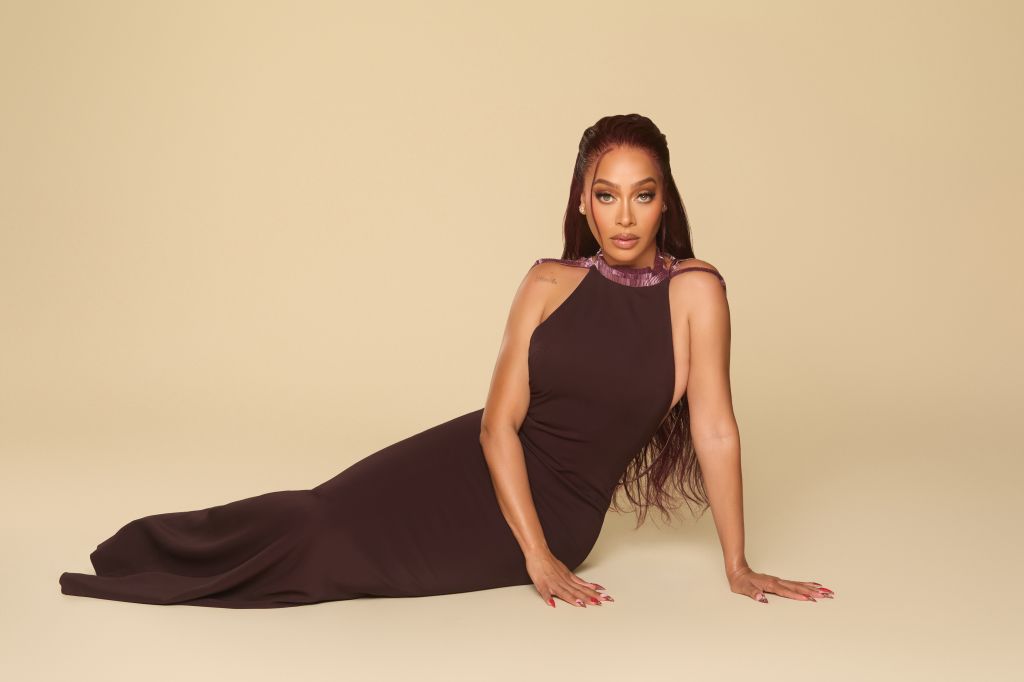
6. La La Anthony
Source: Canvas Beauty / Canvas Beauty
La La Anthony has done a little bit of everything: television personality, actress, producer, author, entrepreneur and fashion figure. The Brooklyn-born star is of Puerto Rican heritage and has consistently spoken proudly about her connection to the island.
“I love everything about it. I think it’s like swaggy and just confident. [When] you know you just come from an amazing culture,” the media icon gushed during a 2024 interview with Remezcla. “I’m honored to be able to live that, and step in that and embody that.”
She’s also been vocal about the treatment of Puerto Rico, particularly following devastating hurricanes and other crises. In 2017, Anthony supported relief efforts for Puerto Rico after Hurricanes Irma and Maria caused significant damage throughout the island.
She also used her platform to advocate for communities in need. A true leader at heart, her philanthropic work has included efforts supporting young people and underserved communities, making her another example of a celebrity using her success to give back.
7. Rosario Dawson
Source: Leon Bennett / Getty
Rosario Dawson has been acting since her teenage years, eventually building a career that includes everything from Rent and Sin City to major television and franchise roles.
Dawson comes from a multicultural background that includes Afro-Cuban and Puerto Rican heritage, and she’s been particularly outspoken about social and political issues.
One of her biggest contributions to the Latino community came through her work co-founding Voto Latino, an organization focused on increasing Latino civic engagement and voter participation. She’s also spent years supporting environmental, social justice and human rights causes. Dawson is a great example of someone whose activism has become almost as recognizable as her acting career.
8. Gina Torres
Source: Paras Griffin / Getty
Before Hollywood had a mainstream vocabulary for “Afro-Latina,” Gina Torres was already living that reality.
The Cuban-American actress has starred in Firefly, Suits, Pearson, The Matrix Reloaded and numerous other major productions. But Torres has been remarkably candid about how difficult it was to navigate Hollywood as both Black and Latina.
During an interview with CNN in 2021, the actress said she was often typecast in Black roles because some Hollywood producers felt as though she wasn’t Latino enough.
“You’re too exotic and they didn’t want to confuse the audience,” Torres recalled to the outlet.
Torres explained that many Afro-Latino actors are often forced to hide “in plain sight,” as Hollywood would rather cast them as Black to be more palatable for audiences.
Torres hit a breaking point when she was offered the role of Tommy Vega on 911: Lone Star. Before agreeing to take on the leading role, she told the show creator Tim Minear flat out:
“I need to speak my language (Spanish) whenever possible. I need to let the audience know that this is also a face of Latinidad.”
She added:
“That was incredibly important for me because so often marginalized people aren’t really depicted as being fully human. They’re not given the same attention, they’re not given the same time, they’re not given families.”
Torres has also supported organizations like the National Hispanic Media Coalition designed to eliminate hate and discrimination against Latino and marginalized communities. The Hollywood star has also become a mentor creating opportunities for Latino and Afro-Latino talent.
9. Anitta
Source: WWD / Getty
Brazilian superstar Anitta brings a different dimension to the conversation because Brazil has one of the world’s largest populations of African descendants.
The global pop star has incorporated Brazilian funk, Afro-Brazilian culture and other elements of her country’s diverse musical traditions into her work.
She’s also openly discussed her connection to Candomblé, an Afro-Brazilian religion.
That visibility has come with backlash. After incorporating sacred Candomblé imagery and practices into her music video for “Aceita” in 2024, Anitta faced criticism and lost followers, but she defended the religion and spoke against prejudice and religious intolerance during an interview that year.
“I couldn’t care less about what people think. Even more this following situation. I’d rather have half of a following: just be amazing people that I can exchange vibes and energies with then just to have a bunch of lost souls that they’re just pointing at each other judging each other,” she said, according to footage obtained by the Associated Press.
Her recent work has continued exploring Afro-Brazilian spirituality and culture, making her an especially interesting figure when discussing the global influence of African-descended Latin American communities.
10. Ilia Calderón
Source: John Nacion / Getty
Ilia Calderón proves that Afro-Latina representation isn’t limited to Hollywood.
The Colombian journalist has become one of the most recognizable Spanish-language television anchors in the United States. According to her bio, she was the first Afro-Latina to host a national news program in Colombia.
In 2017, Calderón made history as the first Afro-Latina to anchor a major U.S. news desk, joining veteran journalist Jorge Ramos as cohost of Noticiero Univision, the network’s flagship newscast. In 2024, she became the sole host of the major evening news program. The historic milestone made her the first Afro-Latina to helm a major national evening news show. She also serves as co-host of Univision’s primetime news magazine, Aquí y Ahora.
In 2017, Calderón attracted national attention for an interview with Christopher Barker, the self-styled imperial wizard of the Ku Klux Klan, conducted on the hate group’s own property. Rather than backing down in the face of racial slurs and threats to “burn” her, Calderón continued to challenge Barker directly about his beliefs and positions. The interview earned her one of her two Emmy Awards.
Reflecting on her role as a journalist, Calderón told Forbes:
“As a journalist working for Univision, we have bigger responsibilities now in this country when racism and discrimination is coming to the surface. My role today as Black Hispanic immigrant will be to scrutinize who’s in power and to be more vigilant of civil and human rights for all our viewers.” she states. “I think this is also a great opportunity to show girls that are starting and attending college to do what I do today, that they too can make it. Keep up the hard work and dreams and one day you will succeed.”
11. Jeimy Osorio
Source: Leon Bennett / Getty
Puerto Rican actress Jeimy Osorio is another major name to know. She’s perhaps best known internationally for portraying legendary Cuban singer Celia Cruz in the television series Celia.
Osorio has proudly embraced her Afro-Puerto Rican identity and has spoken about growing up with her natural hair and features. Her career is another reminder that Afro-Latina representation isn’t a single look or experience.
Osorio told PEOPLE CHICA in 2018 that she has been super proud of her Afro-Latina heritage.
“When I started out doing theater and commercials, I always accepted myself with my curly hair, with my Afro. I never saw it as something that would hold me back, to the contrary,” she shared, praising her high self-esteem. “The fact that I carried myself so naturally perhaps helped. No producer ever told me I had to straighten my hair…. I said: ‘This is who I am and on top of that, I have curly hair and I’m Black.’”
She added that her unique heritage has been her “greatest advantage.”
“I’ve never had issues with my hair or having a TV producer tell me that I’m too dark-skinned or light-skinned or too Latina for a role,” the star shared. “I can’t say I feel more pressure or feel stereotyped because when they see something special in you that they like, they don’t care about your nationality. I’m getting great reactions from casting directors.”
From portraying one of Latin music’s greatest icons to speaking about Afro-Latina pride, Osorio has helped put Black Puerto Rican identity in front of international audiences.
Why Afro-Latino Representation Matters.
The people on this list represent different countries, backgrounds, generations and lived experiences, and that diversity is exactly the point. There is no single way to look, sound or identify as Afro-Latino. From one community to the next, the culture takes on different forms, shaped by history, heritage and identity. And we love seeing that culture continue to thrive.
RELATED CONTENT:Here’s Your Friendly Reminder That Amara La Negra’s Still Thicker Than Tu Mama’s Mangú
 MoviesHub